The best of flexibility, support, and community.
Your pace. Our support. Our community.
Two small programs in Mesa. A hybrid learning lab for grades 6–12 and a multi-age microschool for grades K–5. Students work independently, but never alone.
A hybrid learning lab for students who need a different way through high school.
Your pace
Catch up on credits, move ahead, or just work at a pace that fits. Every student makes real progress toward their own goals.
Our support
A learning coach tracks progress daily, holds students accountable, celebrates wins, and steps in fast when something goes sideways.
Our community
We keep enrollment small on purpose. Students are known by name, build real friendships, and belong somewhere.
A week at the Learning Lab.
Flexible, with structure you can see. Learning Lab students are on campus Monday through Thursday, 8:00 AM to 3:00 PM. Fridays are coursework from home.
Coursework, one-on-one check-ins, goals set for the week.
Focused work time with a coach in the room.
Community & Innovation Day. Seminars and team projects.
Progress review, catch-up blocks, art studio time.
Independent coursework. Clear expectations, checked Monday.
Visual arts run alongside the academic day for students who are ahead, need a break from the screen, or want to build a portfolio. An elective art credit is available.
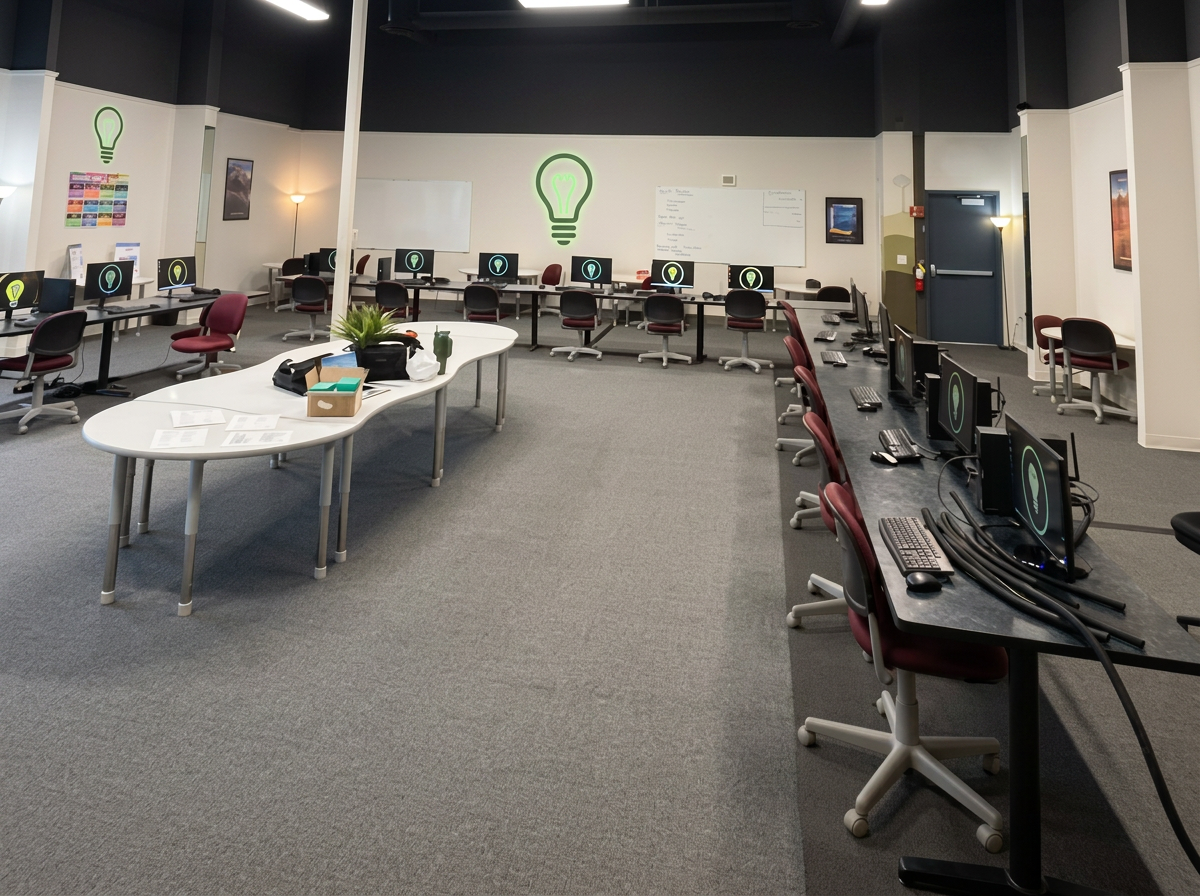
Community & Innovation Day
Every Wednesday the whole Learning Lab is on campus together. Mornings are interactive seminars: communication, leadership, character, financial literacy, goal setting, problem solving.
Afternoons are large-scale real projects. Solving an actual community problem, making a product, running an event, launching a small business. Every student has a defined role and the team needs them to do it.
Flexible online curriculum. Applied in the room.
Students move through a flexible, accredited online curriculum at their own pace. What makes it stick is what happens next: we apply that knowledge through the five skills, the 5Cs, that we build in every student, and we hold all of it together with the virtues we aspire to and build alongside each other.
An essential skill: to investigate, critically evaluate, generate ideas, and eventually converge on a solution.
Solving complex problems requires sharing ideas across a variety of perspectives and experiences. People work together to cultivate a sense of community and improve the quality of outcomes.
Life demands adaptability and flexibility, learned through creative and innovative practice. It matters that students can imagine, visualize, and brainstorm new possibilities.
Communication is a building block for all learning. It is essential to be able to share, persuade, and understand across a variety of sources.
Community is learning to lean on each other for support and for growth. Students learn to ask for help, to give it, and to be counted on. It is what holds the other four together, and it only works when a place is small enough that everyone is known.
Belonging
Belonging and acceptance are dignity.
A student walks in and is greeted by name. Teachers know their story. They are members of this community from day one. We are not judged by our highest highs or our lowest lows; belonging is built by what we do every day. A student who believes they belong takes risks differently and fails differently.
Wonder
Opening up to wonder lets you learn what you otherwise would not.
Students ask questions without fear of being wrong. Not understanding is an invitation to investigate deeper, never to accept a surface answer. Wonder is not a distraction from standards. It is the engine that drives mastery of them.
Purpose
Each person has purpose, and uncovering it is self-discovery.
Students connect what they are learning to something larger than grades or applications. A student who arrives saying they are not an artist begins to recognize their own gifts. Purpose is not invented, it is uncovered, and our job is to help students find it and move toward it.
Courage
Courage is not the absence of fear. Courage is doing what is right in the face of something that might seem scary.
Courage is not fearlessness and it is not recklessness. Once a student knows they belong and begins to wonder, they need permission to try hard things. We work on this intentionally, including the difference between working through feeling uncomfortable and recognizing when you actually feel unsafe. Those are not the same, and knowing which one you are facing is part of the skill.
Compassion
Compassion is empathy in action. Choosing to care for ourselves and for others.
Students give and receive feedback with kindness, and notice when a peer is struggling. Compassion is not sentimental, it is an active choice. Collaboration becomes formation: you cannot build a performance, a project, or a community without learning to value other people.
Perseverance
Passion and sustained effort toward long-term goals.
Mastery in music, in visual art, or in a sport like pickleball requires effort through real difficulty. When a piece is rejected or falls short of a student's own standard, they reflect and try again. Struggle is not a sign that something is wrong. It is evidence that character and skill are being built. F.A.I.L. stands for First Attempt In Learning.
Humility
A realistic view of self keeps us learning.
A student receives hard feedback without defensiveness and learns from peers with different strengths. A student given a leadership role uses it to lift others rather than elevate themselves. Humility keeps students out of isolation and counters the pride that blocks learning.
Stewardship
Responsible care for ourselves and for what we have been given.
Time, ability, and health are gifts, and students are accountable for how they use them. This is not a burden, it is freedom. You own your choices and you own your path. Because you belong, you wonder. Because you wonder, you find courage. Because you have courage, you persevere. Because you persevere, you build mastery worth stewarding.
Joy
Choosing to see beyond the moment and trust that growth is happening.
A student facing a hard project finds joy in the process, not only the outcome. A musician who makes a mistake in rehearsal chooses the learning moment over the disappointment. Joy is not forced positivity or denial of real problems. It is an act of will.
Three students we build this for.
Needs a smaller room
Students who shut down in a 2,000-student high school often come back to life in a calm, focused, supportive space.
Needs real flexibility
Students who need to move at their own speed but still need structure, accountability, and someone checking in.
Independent, not isolated
Students who can drive their own learning but do not want to do it by themselves at the kitchen table.
LUMOS MICROSCHOOL
A small school with a big commitment to knowing every child.
One multi-age community. Four days on campus, with an optional fifth.
Children learn in one multi-age group rather than separate grade-level classrooms, so a student can sit in a reading group above their grade and a math group below it in the same morning.
We learn through pickleball. We learn to multiply by physically moving through the problem across the classroom floor. We learn through doing and through playing, and we let children be children.
The day is built around small-group targeted instruction, collaborative projects, and independent work matched to where each child actually is. Class size stays intentionally small so every child is known, supported, and pushed.
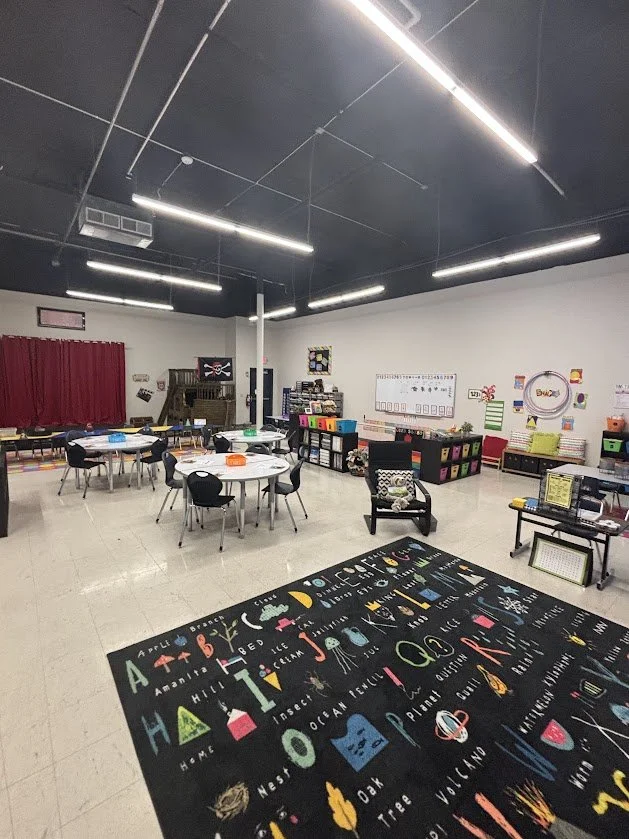
The full program day, four days a week.
We adapt the environment to match the child. Not the other way around.
In larger, more traditional schools, the form of the school drives its function and how it serves students. At Lumos Learning Lab and Lumos Microschool, the form of the school adapts to our function: learning.
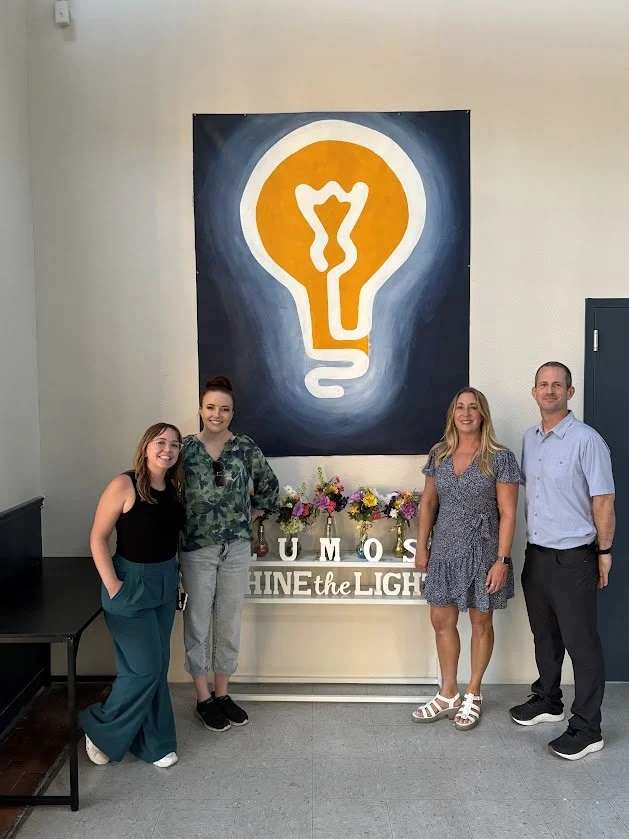
Four adults who will know your student by name.
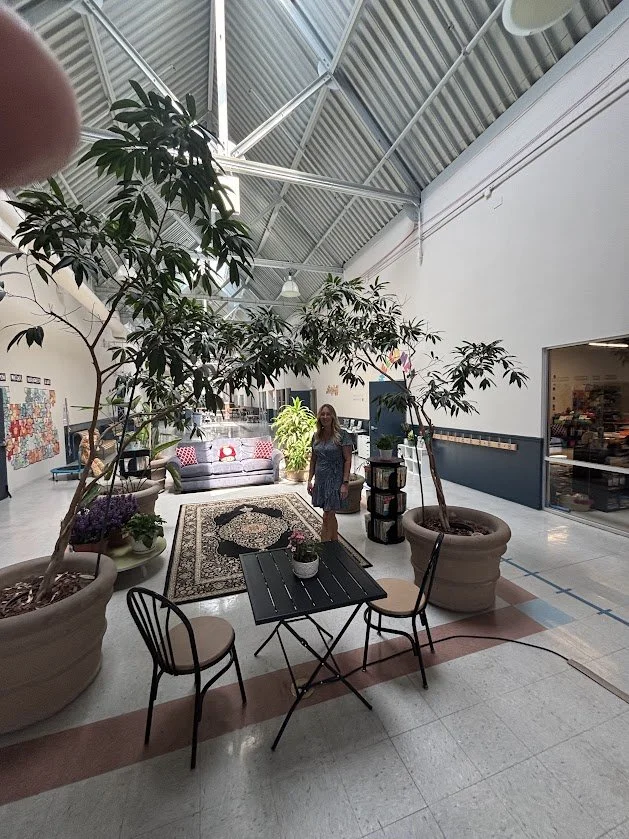
Come see the room before you decide.
Tell us about your student and we will call you back, answer your questions honestly, and say so if this is not the right fit. Tours run during the school day so you can see the program actually running.
Or call 480-930-0972.
Need records from Lumos Arts Academy?
If you need a transcript or student records, have the receiving school send the request one of these three ways:
- Complete the records request form
- Email recordsrequests@studentswin.org
- Fax 888-586-9081
Requests take 7 to 10 business days.
Lumos is accredited by Middle States Association Commissions on Elementary and Secondary Schools, Accreditation International, and the National Council for Private School Accreditation.
Middle State Association Commissions on Elementary and Secondary Schools
National Council for Private School Accreditation